
Polymer Materials Science and Engineering: From Molecules to Advanced Applications
Note: This is the article body. The SEO Description (Abstract) is provided separately in the meta tag and at the end of this document as plain text.
Polymer materials science and engineering is a dynamic, interdisciplinary field that sits at the crossroads of chemistry, physics, materials science, and mechanical engineering. It focuses on the design, synthesis, characterization, processing, and application of macromolecules—long chains of repeating structural units called monomers. From the plastics in everyday packaging to the high-performance composites in aerospace and the hydrogels in biomedical devices, polymers are ubiquitous and indispensable to contemporary life and technological progress.
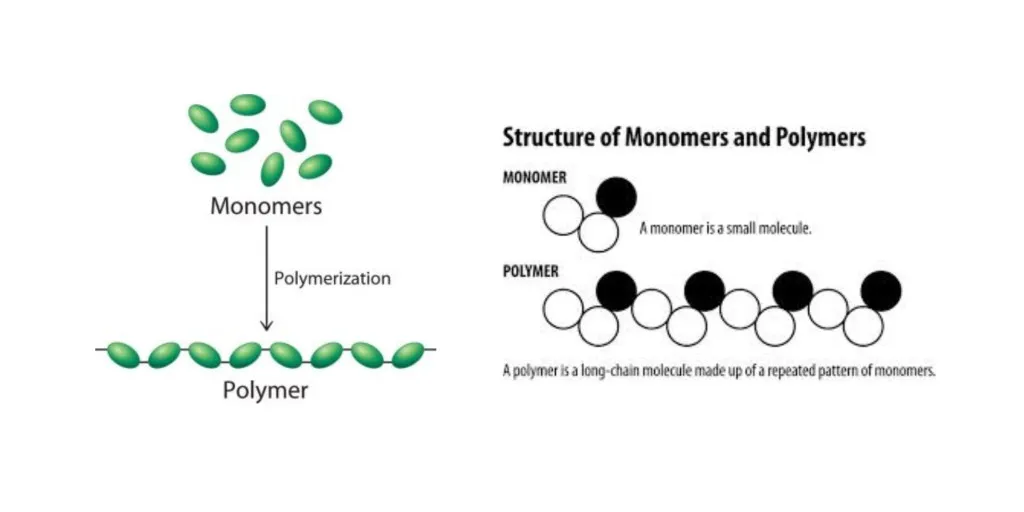
Figure 1: Schematic representation of polymerization, the fundamental chemical process for creating polymers.
Fundamental Concepts and Polymer Classification
The essence of polymer science lies in understanding the relationship between molecular structure, processing conditions, and final material properties. Polymers can be classified in several ways:
By Origin
Natural Polymers: These exist in nature and are produced by living organisms. Examples include cellulose (in plants), proteins (like silk and wool), and natural rubber.
Synthetic Polymers: These are human-made, typically derived from petroleum-based chemicals. Examples include polyethylene (PE), polypropylene (PP), polyvinyl chloride (PVC), and nylon.
By Thermal Behavior
Thermoplastics: Polymers that soften upon heating and harden upon cooling, allowing them to be reshaped and recycled (e.g., PET, polyethylene).
Thermosets: Polymers that undergo irreversible curing or cross-linking upon heating, forming a rigid, infusible network (e.g., epoxies, vulcanized rubber).
Elastomers: Polymers that exhibit high elasticity and can be stretched repeatedly, returning to their original shape (e.g., synthetic rubbers).
| Polymer Type | Key Examples | Typical Applications | Primary Properties |
|---|---|---|---|
| Commodity Thermoplastics | Polyethylene (PE), Polypropylene (PP), PVC | Packaging, pipes, household goods | Low cost, good processability, adequate strength |
| Engineering Thermoplastics | Polycarbonate (PC), Nylon (PA), ABS | Automotive parts, electronic housings, gears | Higher strength, thermal stability, toughness |
| Thermosets | Epoxy resins, Phenolic resins, Polyurethane (PU) | Adhesives, coatings, circuit boards, insulation | High rigidity, thermal/chemical resistance, dimensional stability |
| High-Performance Polymers | Polyetheretherketone (PEEK), Polytetrafluoroethylene (PTFE) | Aerospace, medical implants, chemical processing | Exceptional thermal stability, chemical inertness, mechanical strength |
Synthesis and Processing Techniques
The journey from monomer to finished product involves critical steps in synthesis and processing. Polymerization reactions are primarily categorized as addition (chain-growth) or condensation (step-growth).
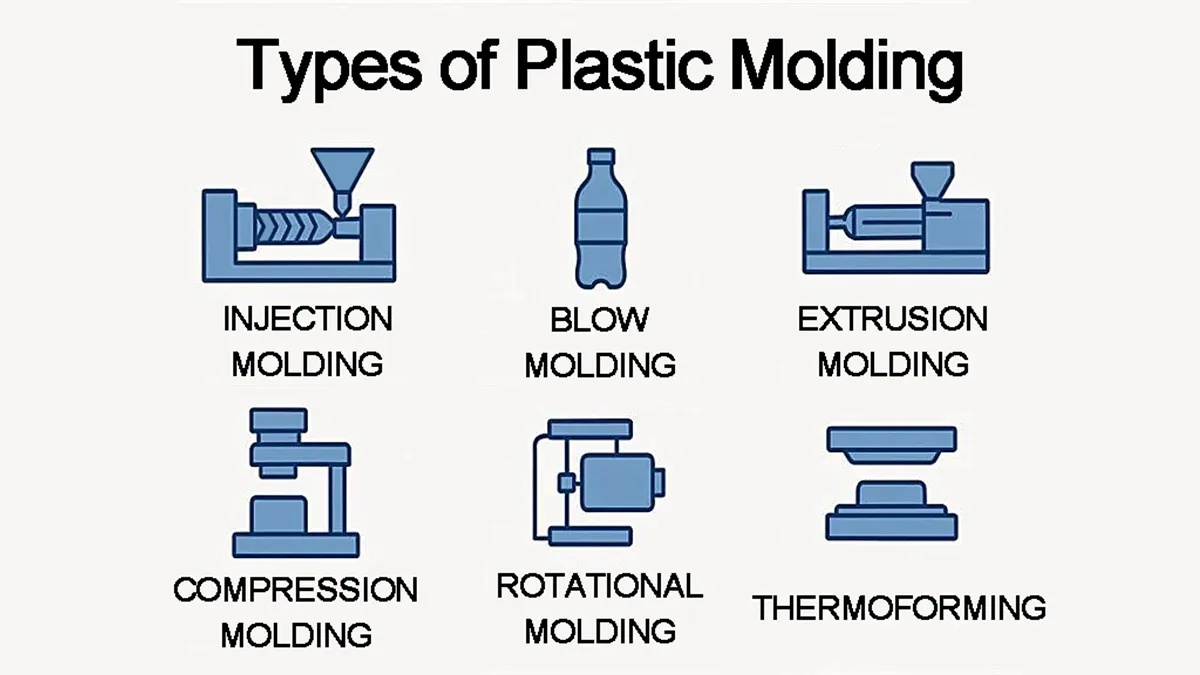
Figure 2: Overview of common industrial polymer processing techniques.
Once synthesized, polymers are processed into useful forms. Key processing techniques include:
- Extrusion: Continuous process to produce films, sheets, pipes, and profiles.
- Injection Molding: High-volume manufacturing of complex, precise parts.
- Blow Molding: Used for making hollow objects like bottles.
- Additive Manufacturing (3D Printing): An emerging technique for creating customized, complex geometries layer-by-layer using polymer filaments or resins.
Characterization and Structure-Property Relationships
Understanding a polymer's performance requires detailed characterization. Key parameters include molecular weight, degree of crystallinity, glass transition temperature (Tg), and melt temperature (Tm). Techniques like Size Exclusion Chromatography (SEC), Differential Scanning Calorimetry (DSC), Fourier-Transform Infrared Spectroscopy (FTIR), and mechanical testing are standard in the field.
The physical arrangement of polymer chains—whether amorphous, semi-crystalline, or oriented—directly dictates properties like strength, transparency, flexibility, and chemical resistance. For instance, high crystallinity often leads to increased strength and barrier properties but reduced transparency.
Modern polymer engineering is pushing boundaries to create smarter, more sustainable, and higher-performing materials.
Smart and Responsive Polymers
Stimuli-responsive polymers, or "smart polymers," change their properties in response to environmental triggers like pH, temperature, light, or specific molecules. These are revolutionary for drug delivery systems, where a polymer capsule can release its payload only at a specific disease site.
Sustainable Polymers and Green Engineering
Addressing environmental concerns is a major driver. Research focuses on biodegradable polymers (e.g., Polylactic Acid - PLA), bio-based polymers derived from renewable resources, and advanced chemical recycling methods to achieve a circular economy for plastics.
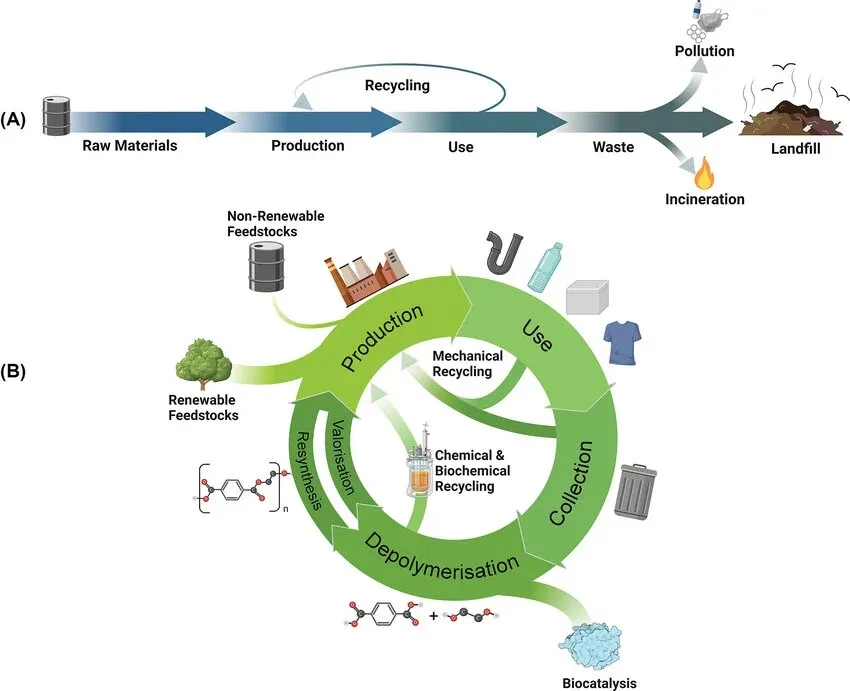
Figure 3: The shift towards a sustainable circular economy for polymer materials.
Polymer Nanocomposites and Hybrid Materials
By incorporating nanoscale fillers like graphene, carbon nanotubes, or nanoclay into a polymer matrix, engineers can dramatically enhance properties such as mechanical strength, electrical conductivity, and flame retardancy with minimal filler content. This creates lightweight, multifunctional materials for advanced applications.
Biomedical Applications
Polymers are central to modern medicine. Applications include biodegradable sutures, tissue engineering scaffolds that mimic the extracellular matrix, hydrogels for wound dressings, and polymeric carriers for controlled drug release.
| Advanced Application Area | Polymer Examples | Key Function and Innovation |
|---|---|---|
| Energy Storage & Conversion | Conductive polymers (PEDOT:PSS), Polymer electrolytes | Flexible batteries, supercapacitors, solar cell components |
| Electronics & Optoelectronics | Semiconducting polymers (e.g., for OLEDs), Polyimides | Flexible displays, wearable sensors, dielectric layers |
| Additive Manufacturing | Photopolymer resins, PLA, ABS, PEEK filaments | Rapid prototyping, custom medical implants, complex lightweight structures |
| Environmental Remediation | Functionalized porous polymers, polymer membranes | Water purification, CO2 capture, pollutant absorption |
Polymer materials science and engineering is a continuously evolving discipline that transforms molecular design into macroscopic reality. Its principles enable the creation of materials with tailored properties for specific, often groundbreaking, applications. The future of the field lies in addressing global challenges through sustainable design, multifunctional integration, and intelligent responsiveness, ensuring polymers remain at the forefront of technological innovation for decades to come.